



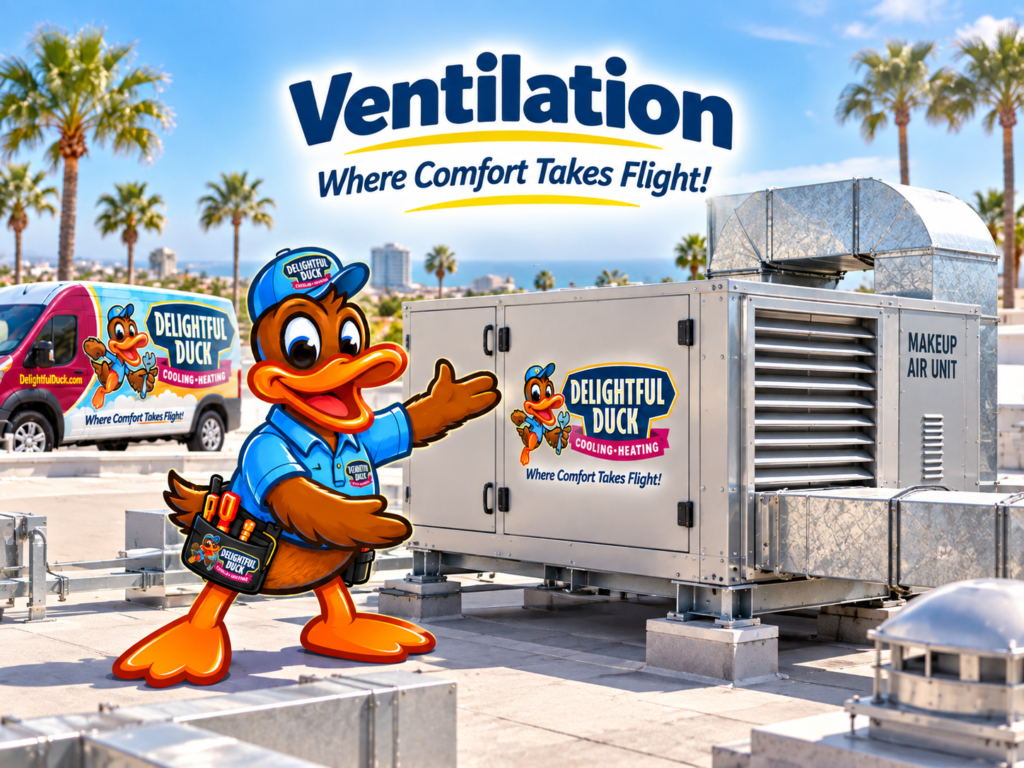
Home Ventilation Services
Ventilation moves air into or out of a building; it should be planned around the source, airflow path and outdoor conditions. Delightful Duck can evaluate concerns such as lingering bathroom moisture, cooking odors or stuffy rooms and discuss an appropriate scope.

Describe Where Air or Moisture Gets Trapped
Note the room, activity and duration of the concern. Ventilation planning needs to consider both where air leaves and how replacement air enters.
Bathroom Moisture Lingers
Describe how long moisture remains after use and whether the exhaust fan runs. The fan, duct route and discharge location deserve evaluation.
Cooking Odors Spread
Identify the current exhaust arrangement and where odors travel. A fan rating alone does not establish effective capture or discharge.
Rooms Feel Stuffy
Tell us about occupancy, door position and when the concern occurs. Air circulation, outdoor-air exchange and temperature control are separate questions.
What Your Home Ventilation Services Proposal Should Explain
Compare the proposed equipment and work with the problem you want to solve. Ask what is included, what is excluded and how the result will be checked.
Existing Exhaust Performance
Review accessible fans, airflow paths and duct connections. Identify the cause before assuming a larger fan is needed.
Duct Route and Discharge
The written plan should explain where exhausted air goes and any required duct changes or exterior work.
Controls and Daily Use
Compare controls or schedules that fit household routines. Ask how the system should be used during normal conditions.
Whole-Home Coordination
Consider existing HVAC, building tightness and fuel-burning equipment when planning substantial airflow changes. Define the complete installation scope.
Consider Outdoor Conditions
Opening windows or bringing in outdoor air may be unsuitable during smoke, poor air quality or other adverse conditions. Ventilation planning should reflect how the household will operate the system at those times.
Exhaust Airflow Can Affect the Building
Substantial exhaust changes may require evaluation of replacement air and combustion safety. Do not modify ducts or install large exhaust equipment without reviewing the building requirements.
From Your Question to a Clear Scope
We discuss the source and timing, inspect relevant accessible equipment and routing, explain feasible improvements and review operation after approved work.
Home Ventilation Services Questions
Is an AC fan the same as ventilation?
Circulating indoor air does not necessarily introduce outdoor air or exhaust pollutants. Confirm what the proposed system actually does.
Can ventilation fix a water leak?
A leak or water-entry problem needs its own repair. Ventilation may help manage moisture from normal activities but does not remove the source of unwanted water.
Should I leave windows open all day?
That depends on outdoor air quality, weather, security and the home. Discuss an operating approach suitable for your system and conditions.
What should a quote include?
Compare fan or equipment details, duct route, discharge, controls, electrical scope, exterior work and any required approvals or testing.
Discuss a Ventilation Concern
Call (805) 626-4201 with the room, activity and airflow or moisture concern you want addressed.