



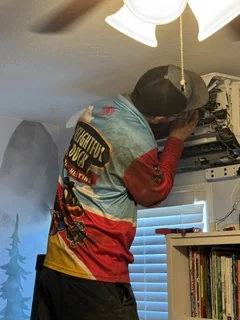
Ductless Mini-Split Repair for Your Property
Tell us which indoor unit is affected, the mode and setting, and whether other zones still work. We check the connected equipment and explain the fault and repair options.

Explain the Symptom Before the Visit
Share the equipment type if known, symptom timing, affected rooms and recent service history. You do not need to remove covers or enter an unsafe space to collect information.
One Zone Is Uncomfortable
Identify the affected indoor unit and whether the issue changes when other zones run. Room load, placement, airflow and control settings can influence the result.
Water or an Error Indication
Record a visible error message and safely visible water. Do not dismantle the indoor unit or repeatedly restart a system that keeps reporting a fault.
Different Rooms Need Different Modes
Some multi-zone arrangements have limits on simultaneous heating and cooling. Review the equipment’s supported operation and settings before assuming a control fault.
What a Useful Repair Visit Should Explain
The recommendation should connect to your equipment and goal. Compare the written scope, price, exclusions and relevant checks before work proceeds.
Identify the Cause
Evaluation can include zone controls, filters and airflow, indoor and outdoor operation, electrical connections, drainage, error information and the refrigerant circuit. The checks should follow the reported problem and the equipment.
Understand the Repair Scope
Ask which fault was found, what the proposed repair changes and whether related work is needed. Compare the written price and any stated repair warranty.
Review Alternatives
A repair and a replacement solve different scopes. Consider equipment condition, past failures, parts availability and comfort history alongside the current repair.
Check Operation After Work
Approved work should include relevant operating checks. Ask what was verified and what care or follow-up remains.
Design Around the Room and Line Route
An office, addition or difficult bedroom needs its own load and placement review. Compare indoor-unit location, sound, condensate disposal, line routing and service access. Equipment should suit the room and any connected zones.
Keep Access and Drainage Safe
Do not open electrical covers or disturb refrigerant lines. Report water near electrical components and turn equipment off when appropriate. Leave internal cleaning and repairs to qualified service.
What Happens Next
Describe the symptom and timing. We inspect the relevant equipment, explain the findings and proposed repair, then perform approved work and review the relevant operating checks.
Ductless Mini-Split Repair Questions
Can you price the repair from the symptom?
A symptom can have several causes. Diagnosis is needed to establish the repair scope and price. Share the symptoms and equipment details when arranging the visit.
Should I repair or replace?
Compare the verified fault and repair quote with overall condition, repair history, parts availability, comfort and the full replacement scope. A simple age-times-cost rule should not decide for you.
Can any indoor unit connect to my outdoor unit?
Equipment must be compatible with the manufacturer’s supported combination and design. Ask for the exact matched model numbers before approving a change.
How should I prepare?
Note symptom timing and settings, keep a safe path to accessible equipment and share gate, pet or parking arrangements. Avoid dismantling the system to prepare.
Explain the Problem and Arrange Service
Call (805) 626-4201 or schedule service. Share your location, equipment and the comfort problem or project you want to discuss.